How Natural Dye Artists from Around the World Shaped My Craft
Posted by Rose on 11th Jun 2026
I have spent much of my life working in small and micro businesses in the clothing industry. For many years, my focus centered on creating comfortable clothing sized for real human bodies. Although I admired the work of natural dye artists, I hadn't yet begun to forge my own dyeing path. That would come later.
In my early years, I studied clothing history, silhouettes and style. Over time, I decided to work exclusively with natural fabrics because of both how they breathe and how they’re less harmful to the environment.
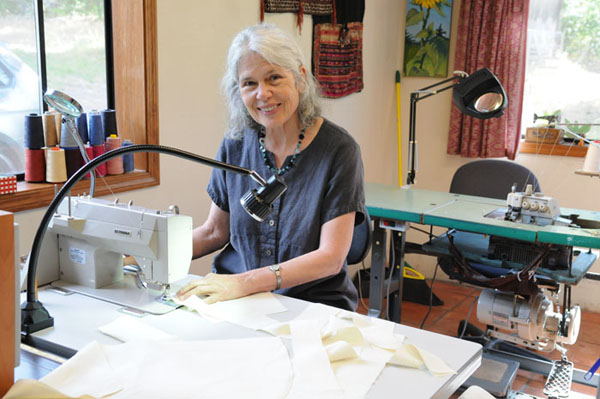
Sitting in front of one of the sewing machines in my workshop
While deepening my practice, I began to take an interest in color and surface design. Although I loved my almost-40 years of creating clothing, production sewing was taking a toll on my body. Plus, dyeing had really piqued my interest. So I decided to become a dyer!
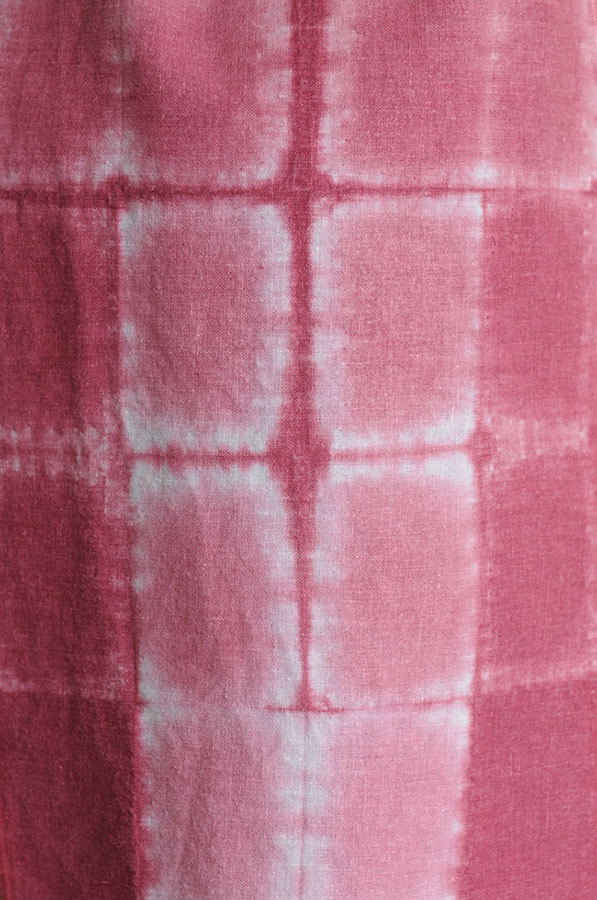
A Shibori scarf from the Sympatico line, the color was achieved with fiber reactive dyes
How I got interested in natural dyeing
There were many dyeing nudges. First, a fellow craftsperson pointed out that the hemp Tencel blend I was working with at the time would be perfect for shibori (a technique from Japan that employs manual resists to produce wonderful, tie-dye-like effects). So, I began overdyeing fabric scraps with fiber reactive dyes and turning them into scarves, which I offered in my booth and online.
Although fiber reactive dyes aren’t natural, they are less harmful than other conventional dyes. Read more about the difference between fiber reactive and other types of dyes in this blog post.
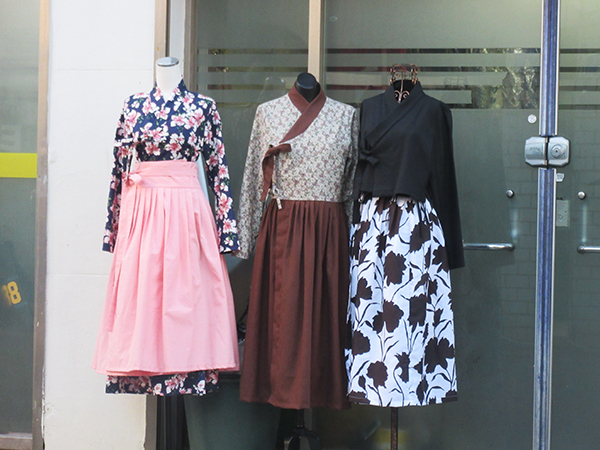
Modern style hanbok from South Korea
Scarves that celebrate South Korea’s natural dyeing tradition
Another nudge came during a trip to South Korea. The impression many Westerners have of the country is of a bustling, tech-focused economic powerhouse. But exploring the island of Jeju helped me get past that stereotype, especially when I stumbled upon Hee Jin’s natural dyeing studio in Jeju City.
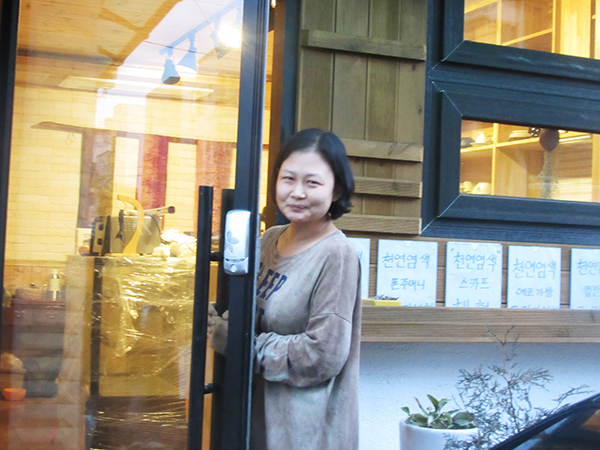
Natural dyer Hee Jin stands in front of her shop and workshop in Jeju, South Korea
It turns out that the island of Jeju, located in the far south of the country and much better known for its sea-diving women, also has its own long-established variation on traditional Korean clothing. The local version, called garot or galjungi, is dyed using natural materials, especially unripe persimmon pulp that imparts shades of brown. The pulp actually strengthens the rugged, traditional cotton work clothes as well as everyday dress.

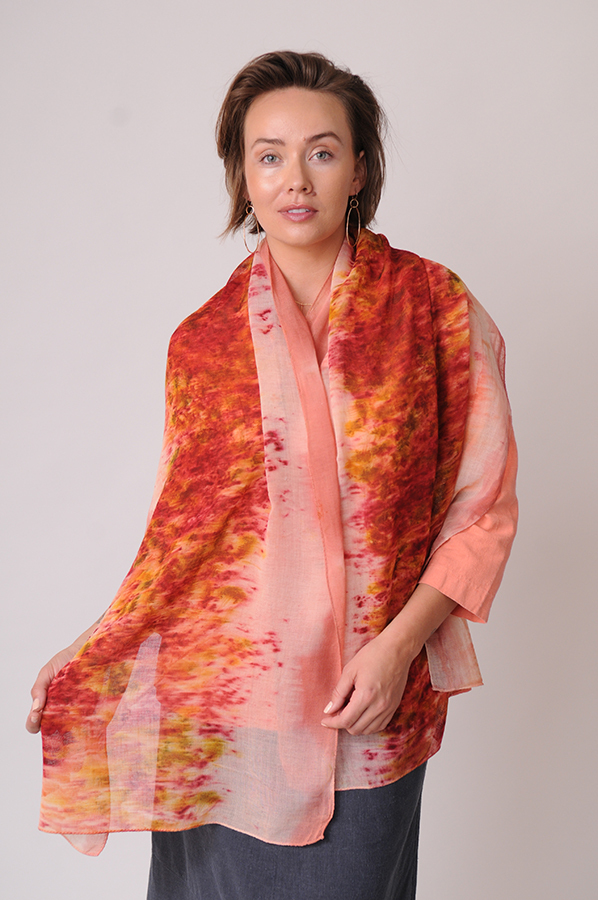
Natural dyeing artists Hee Jin and her mother-in-law sew and quilt clothing, then hand-dye it using a range of organic materials, many of which are grown on their family farm, where the cash crop is tangerines. When Hee Jin showed me some of the scarves they’ve created, I knew I wanted to share them with Sympatico fans back home. Although they’ve all been sold now, you can see examples in the accompanying photos.
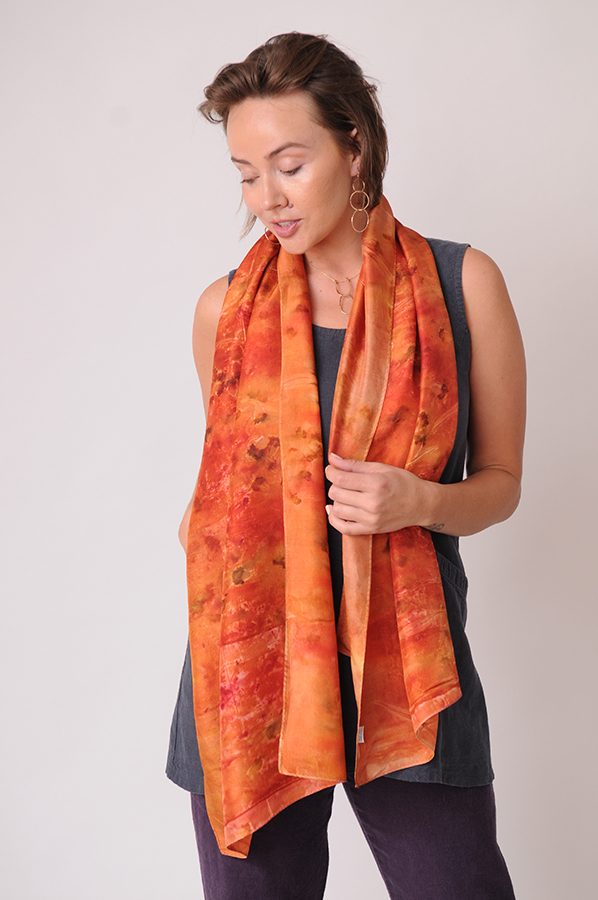
Translating the specific natural substances that Hee Jin named proved to be a bit of a stretch for Google, so my descriptions are based on the information I was able to glean. What was evident, language challenge aside, was the beauty of the work.
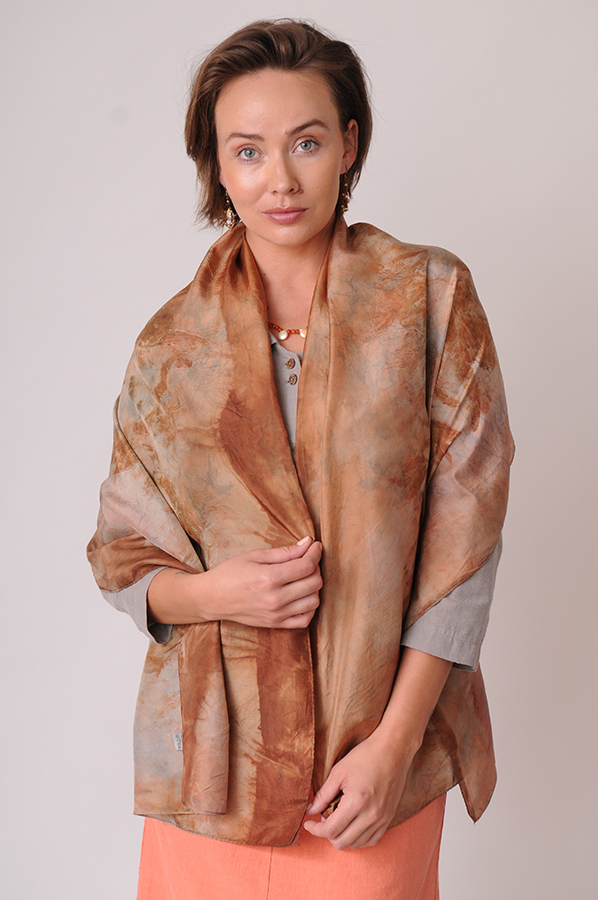
Organic dyeing in Indonesia
A year later, I met a natural dye artist named Dedi Purwadi in Yogyakarta, Indonesia. Dedi, the owner of Batikjolawe, makes precise, beautiful batiks using exclusively organic dyes.
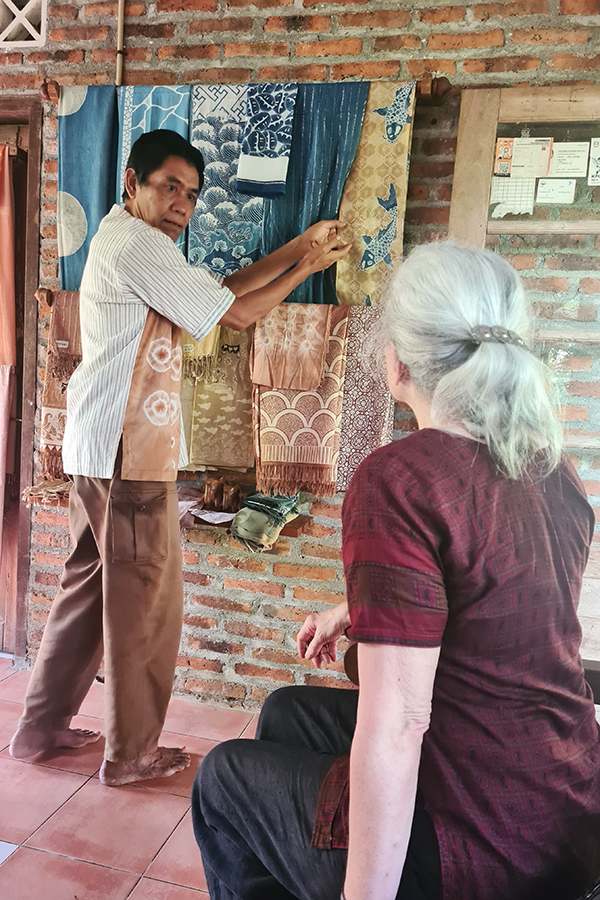
Natural dye artists, like Dedi from Batikjolawe, have helped me hone my craft
I was able to take organic dye classes with Dedi and learned a lot about processing natural materials to make colors. We worked from his home studio, where many of the trees and flowers in the vicinity could be used to make dye. I also experimented with indigo, which came in 1 kg bags that we’d mix with water.
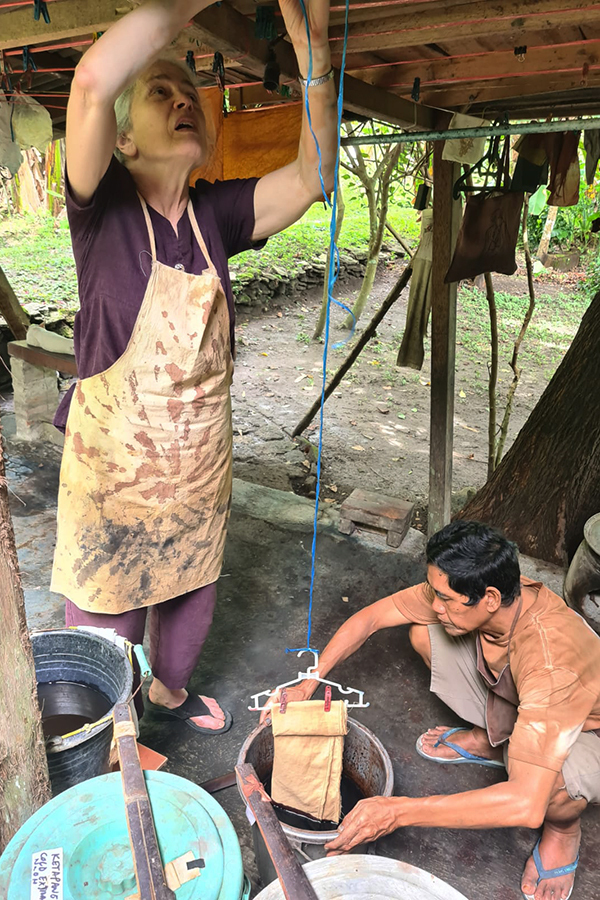
I got to work with different dye materials, mordants, and fixatives, watching how small changes created completely different shades and textures. I didn’t just learn about natural dyeing in theory, but actually experimented, tested, observed and adjusted. It was less like following strict instructions and more like being guided through a creative process with a lot of room for curiosity.
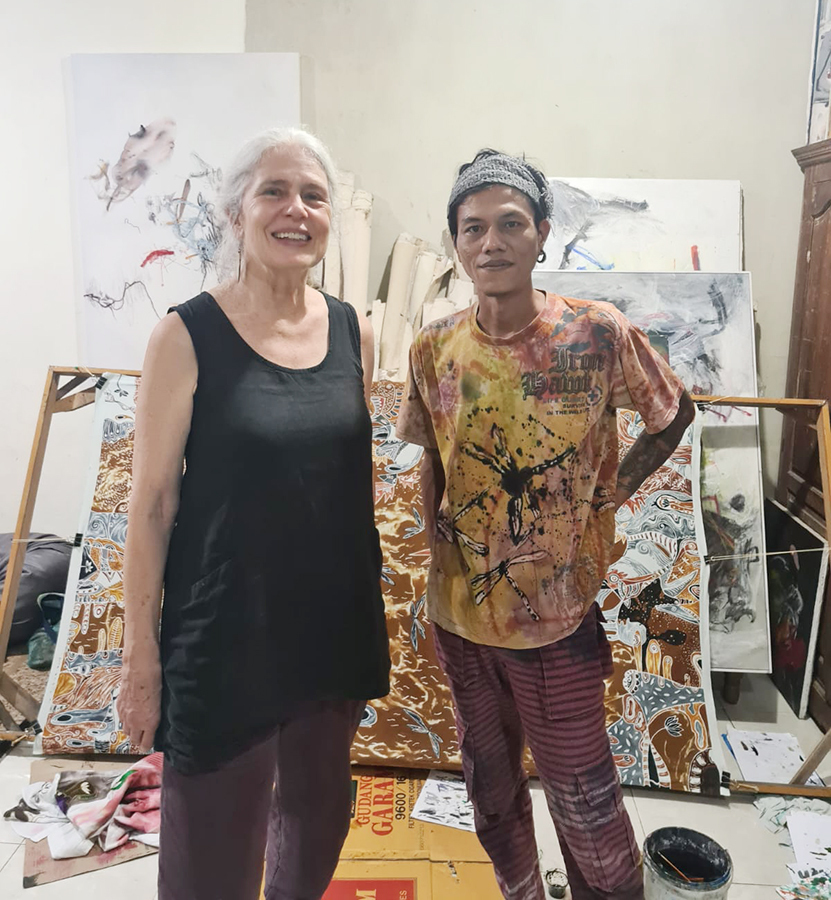
I studied with contemporary painter and batik artist, Hananta Nur
Batik with conventional dyes
In the same trip, I studied batik with Hananta Nur, another skilled batik artist who uses mostly conventional dyes but also experiments with natural dyes.
In our classes together, we used the traditional batik tool called the canting to add layers of wax and dye to fabric. The result was multi-colored, vibrant pieces on natural fibers like cotton and hemp.
More practice with indigo, tannins, and metal dyeing
Back home in the US, excellent online classes from British Columbia-based natural dye artists, Maiwa, furthered my knowledge of indigo, tannins and metal dyeing. And the British dyer, Caroline Nixon, taught me the wonders of ecoprinting in her online class.
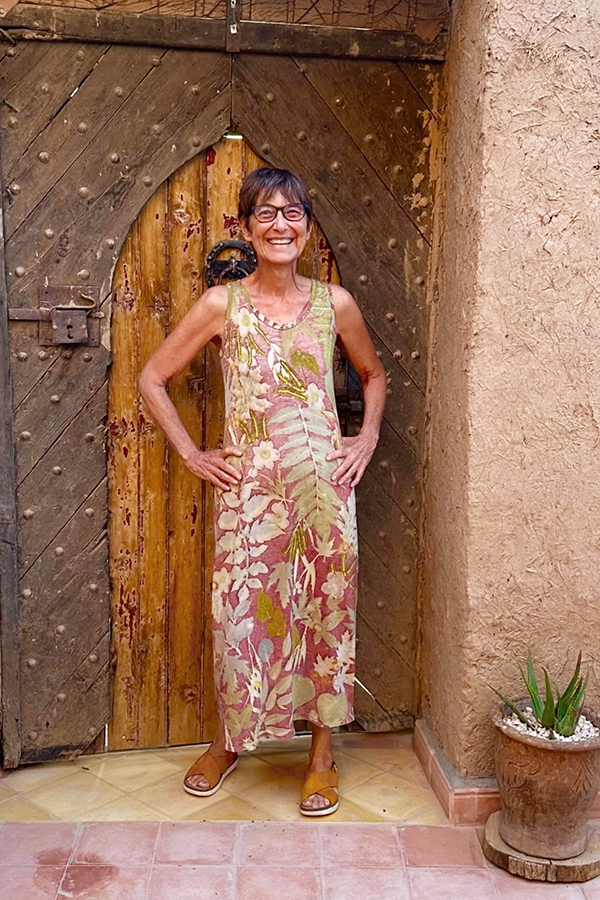
Natural dyer Carolyn Nixon, wearing one of her creations
Dyeing from plants
One of the things I love about using natural dyes is how much I am learning about the plants they come from. My garden is fast becoming a dye garden.
I’ve grown and used cosmos, coreopsis, madder, goldenrod, black hollyhocks (which produce somewhat fugitive dyes) and marigolds. I hope to add Lady’s Mantle to my garden and other trusted dye plants, and to continue to explore both cultivated and native plants for their dye properties.
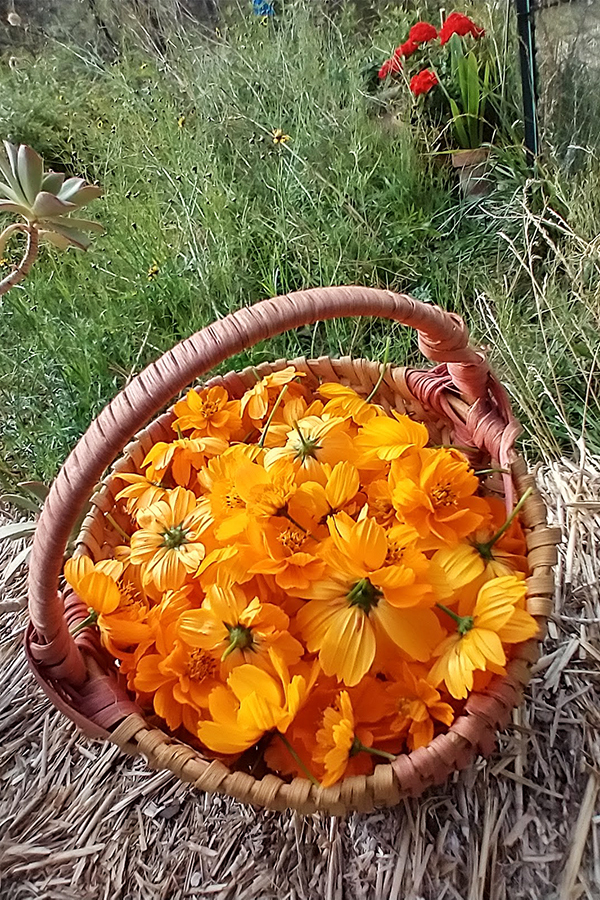
A basket of cosmos I gathered to use for ecoprinting
Now, I create scarves and wraps and work exclusively with natural fabrics. My stash of cottons, hemps and silk, and some outliers such as ramie, take color beautifully and are a delight to wear. I also dye and sew decorative pillows, most of which I offer in my outdoor shop at the Lithia Artisans Market.
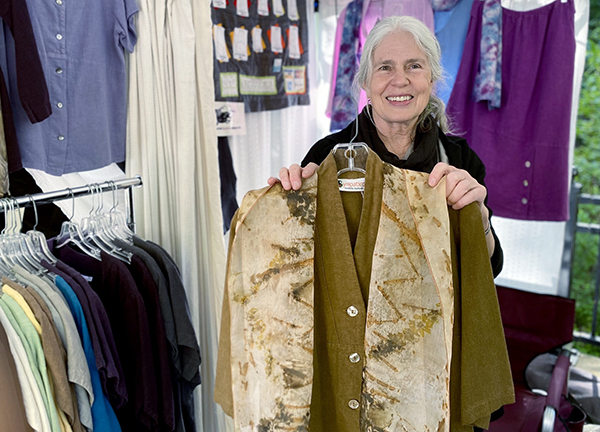
I’m grateful to all of these natural dye artists for their guidance. Both formal classes and conversations with the dyers have been formative for me. My dye practice has proven to be extremely rich and rewarding, with limitless potential for learning and self-expression.
Share: