In Crafting Artisan-Made Textiles, Exploring Indigo Has Been a Remarkable Learning Experience
Posted by Rose on 24th Oct 2022
This ancient dyestuff has a fascinating and dark history, but new plant-based forms hold promise for eco-friendly clothing.
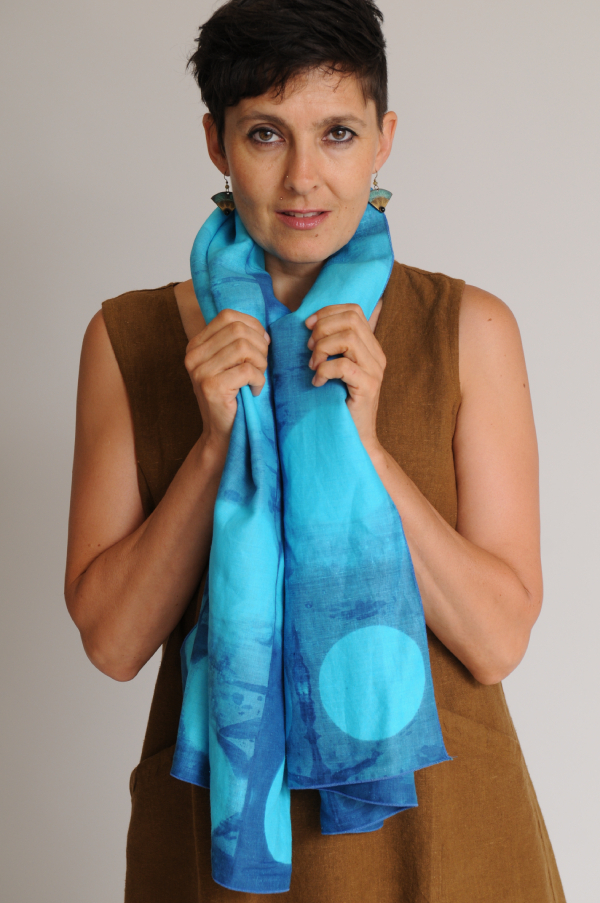
I only dipped the Impressionistic Scarf/Wrap in Hemp/Tencel a few times to produce lighter shades of blue. Indigo color deepens with every dip.
What is the history of indigo dyeing?
Humans have obtained indigo from a number of plants that grow in Europe, Asia, Africa, and the Americas for millennia. They all contain indican, a natural glucoside found in indigo-producing plants, from which the indigo is produced. Regardless of the plant source, the indigo itself is the same and works similarly on textiles.
People have been dyeing with indigo for more than 6000 years. And as with other sought-after commodities such as tea, coffee, sugar, and opium, this dyestuff has had a checkered history on the global-trade stage. Slave labor was used in the US, Africa, and the Caribbean to grow and harvest it.
Although indigo is nontoxic and even used topically in some cultures as a medicine, the dye can become toxic if taken internally in large enough quantities.
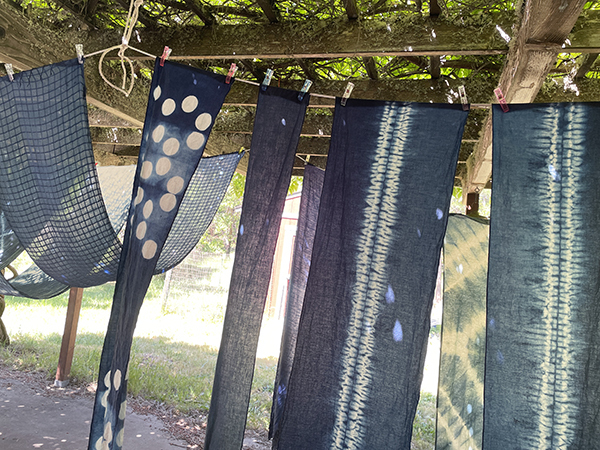
A collection of indigo-dyed scarves drying outside my workshop.
How does indigo dyeing work?
Applying indigo is a much different process than working with other dyes, both natural and synthetic. Preparing a dye bath is as much art as technology when it comes to getting the fermentation process just right. Once you hit the sweet spot, you must maintain the action of the dye by holding a warm temperature—in winter, I use an electric blanket set on low heat to keep the dye bath active. But the dye bath inevitably changes somewhat over time, getting weaker and weaker with each application.
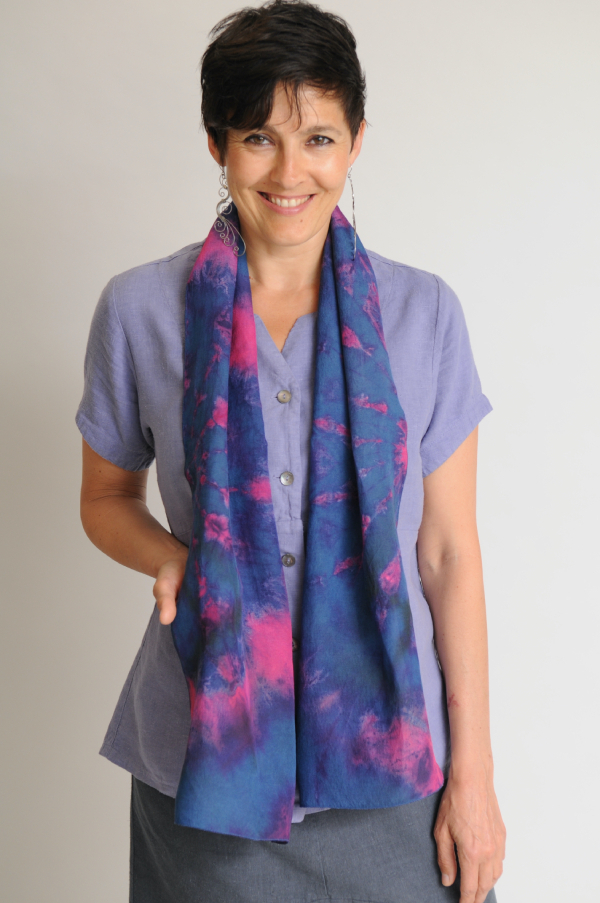
I dyed the Indigo and Pink Scarf using plant-based indigo and shibori in successive dips to create the design on hemp/Tencel.
Indigo dyeing is like magic to me. When dipping fabrics in a dye bath, they emerge yellow. But as the fabric is exposed to air, it begins taking on a blue shade. Successive dips result in teal, then blue. Just how deep a shade of blue depends on the number of dips, the strength of the dye bath, and the receptivity of the fabric.
I write more about my experiences dyeing with indigo in this post.

The Middle Path, an indigo-dyed cotton scarf features Shibori stitching along the center line.
What’s the difference between natural and synthetic indigo?
Indigo from plants versus synthetically produced indigo are chemically identical, other than in their carbon molecules. The carbon is plant-based with natural indigo, whereas the synthetic indigo contains carbon derived from petrochemicals. It takes a specialized test to detect that difference.
Commercial synthetic indigo sells for a tiny fraction of its plant-derived counterpart. Natural indigo is used largely in artisan-made apparel because it is more labor intensive and thus, more expensive.
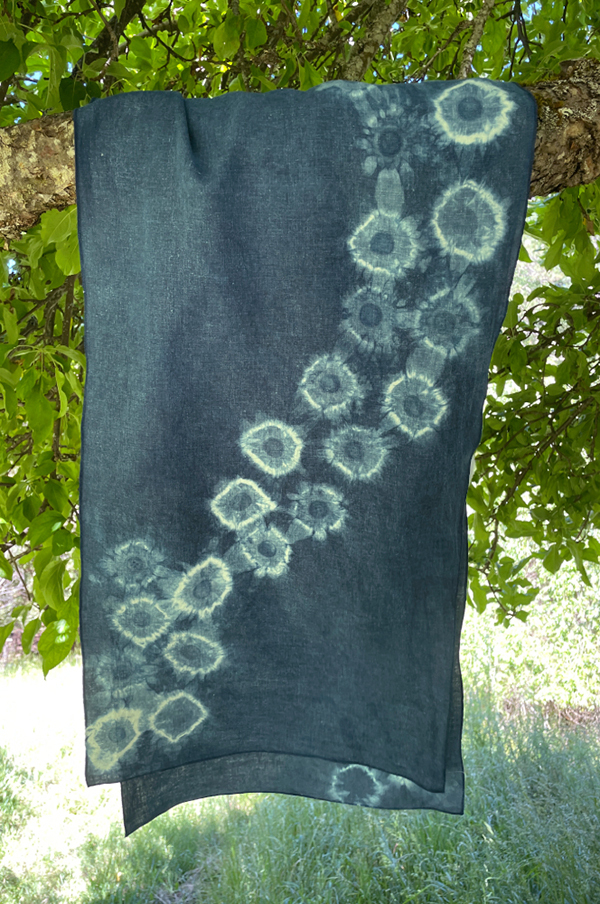
Stepping Stones hemp/Tencel scarf has white stylized circles using the ties and patterns of Japanese shibori.
Getting natural indigo in the US
There’s good news on this front, though. A company called Stony Creek Colors has developed a tropical legume that’s native to the Americas, seeking to produce a consistent form of indigo at scale. (Here's more about their journey to offering a viable product in the US.) The company warns that due to crop-to-crop variations, natural indigo will always need more hand-holding than its synthetic equivalent. Brands such as Levi’s, Patagonia, Nudie Jeans, and Wrangler have begun making forays into this market, buying Cone Denim’s fabric that uses Stony Creek indigo.
Though plant-based denim is a tiny part of the jeans market, as our dawning consciousness about the harm of fast fashion matures, that should change.
Share: